/

Before bouldering攀爬前

1.1Gear — choosing climbing shoes装备:选攀岩鞋

  • Size: beginners should go half a size to one size up, or use their street-shoe size. Your toes should touch the front of the shoe comfortably, without intense pain.
  • Why not buy extremely tight shoes? Extreme tightness is for high-precision edging by advanced climbers. Beginners do not yet have that small-foot-muscle strength, and painful shoes will just make you want to quit.
  • What the shoes do: climbing shoes use sticky rubber that gives far more friction than regular sneakers, so you can stand on holds that look impossible in ordinary shoes.
  • 尺码:初学者选大半码到一码,或平日鞋码。脚趾碰到鞋头即可,不要剧痛。
  • 为什么不要买特别紧的鞋?极致贴合是给进阶者做精确踩点用的。初学者脚部小肌群还不够,痛只会让你想放弃。
  • 鞋的作用:攀岩鞋的橡胶摩擦力远高于普通运动鞋,才能踩住看起来不可能的点。

1.2Grades and color分级与颜色

  • American bouldering grades: V0 to V17. The number is only a starting point for how hard a problem feels.
  • European bouldering grades: 4a to 9a.
  • If you are a beginner: start at V0 and add difficulty slowly. Do not jump grades just because a color looks easy.
  • Color vs. grade: holds of the same color are one problem. That color is mapped to a grade, but every gym has its own color chart on the wall — read that chart before you pick a line.
  • 美式抱石等级:V0 到 V17。数字只是难度入口,手感还看点、距离和坡度。
  • 欧式抱石等级:4a 到 9a。
  • 初学者:从 V0 开始,慢慢往上加。不要因为某条颜色看起来简单就跳级。
  • 颜色与等级:同一种颜色是一条线路,颜色会对应等级。每个岩馆有自己的颜色说明图,选线前先看图。

1.3How to start and finish如何开始和结束

  • Read the start tags. Look for tape or labels on the holds. If there is one tag on a hold, both hands must start there. If there are two tags on different holds, one hand goes on each. Some gyms also tag specific starting footholds.
  • To begin, both feet leave the ground from that start.
  • Finish: match both hands on the Top hold and keep them there, stably, for two to three seconds — or tap the top marker, if that is how the gym marks a send.
  • 先看起步标记。找岩点上的胶带或标签。一个点上只有一枚标记:双手都要放在这个点。两个点上各有标记:一手一个。有的岩馆还会标起步脚点。
  • 开始时,双脚离开地面。
  • 结束:双手同时抓稳终点(Top),保持两到三秒;或按该馆规则轻拍顶部标记。

1.4Landing safely安全落地

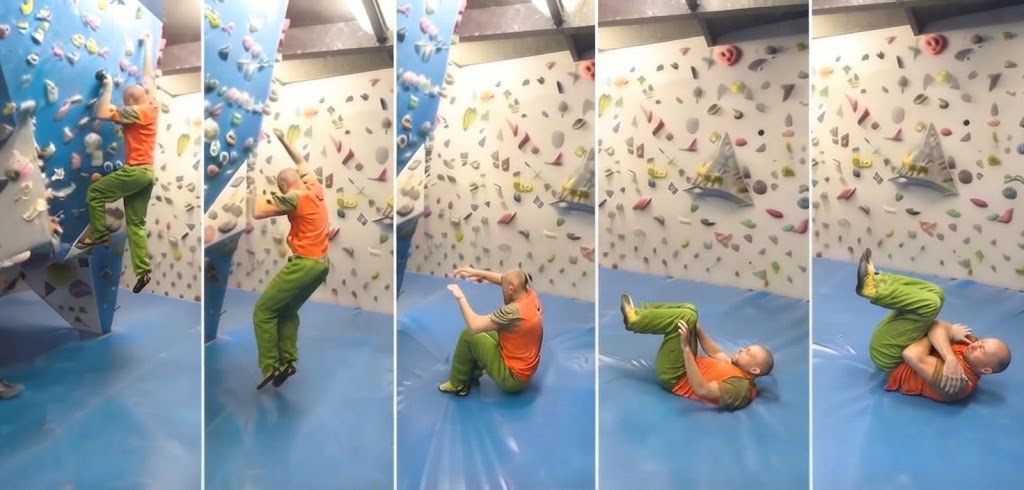
  • Land on both feet: keep your feet about shoulder-width apart. That gives you a stable base and makes it less likely you will twist an ankle.
  • Bend your knees: let your knees and hips flex the moment you hit the pad. They are the shock absorbers. Do not keep your legs stiff.
  • Tuck your arms: keep your arms close to your chest, like a bear hug. Do not reach out to catch yourself with your hands — that is how wrists get broken.
  • Roll backward: let your momentum carry you into a smooth roll onto your back and shoulders, so leftover energy leaves the body instead of jamming into one joint.
  • 双脚落地:两脚大约与肩同宽,底盘更稳,脚踝不容易扭。
  • 弯曲膝盖:一碰到垫子,膝盖和髋马上屈曲,当作减震。不要把腿绷直。
  • 收臂:手臂靠近胸口,像熊抱。不要伸手去撑地——手腕很容易骨折。
  • 向后滚:顺着惯性滚到后背和肩膀,把剩余力量散掉,而不是砸进某一个关节。

1.5Mindset心态

Bouldering is a dialogue with yourself, not a competition against the person on the next problem.

You are solving a physics puzzle: gravity, the wall, and your own body. Everyone’s body is different, so everyone’s beta (the sequence that works) is different. Copying someone taller or stronger is optional, not a rule.

Know when to quit. If your forearms are pumped, or the drop feels unsafe, come down. Safety always comes first. Getting slightly better, slowly, is the whole game.

攀岩是跟自己对话,不是和旁边那个人比赛。

你在解一道物理题:重力、岩壁、自己的身体。每个人体型不同,过法(beta)也不同。可以看别人,但不必照抄更高或更壮的人。

及时放弃。前臂泵死了,或掉落觉得不安全,就下来。安全永远第一。缓慢进步,就是这件事本身。
1.6Before the real climbing正式攀爬前

  • Nails: check your fingernails and trim them. Long nails snag on holds and tear.
  • Pockets: empty your pockets. Keys, phones, and bottles hurt you — and whoever is under you — if you fall.
  • Warm up: always warm up before you climb. Cold fingers and shoulders are easy to injure.
  • Read the wall: before you pull on, look at the problem — where it goes, where you will land if you fall. Do not climb directly above or below someone else.
  • Pad etiquette: when you finish, step off the mats. Do not walk across the pads; they are a landing zone, not a corridor.
  • 指甲:先检查,最好修剪。长指甲容易卡在岩点上,把自己撕伤。
  • 口袋:不要装东西。钥匙、手机、水瓶掉下去会伤到自己,也会伤到下面的人。
  • 热身:爬之前一定要热身,避免手指和肩关节损伤。
  • 看线:上手前先观察线路走向、掉落会落在哪。不要爬到别人正上方或正下方。
  • 礼仪:结束后离开垫子。最好不要在垫子上走来走去——垫子是落地用的,不是过道。

Basics基本知识 first time on the wall第一次上墙,重建发力

2.1Getting on the wall: like climbing stairs上墙:像走楼梯

  1. Route selection & safety check 选线与安全检查

    Route:start with the lowest grade (e.g. V0–V1) so you can focus on form, not raw strength.

    选线:从最低难度开始(如 V0–V1),先练动作,不拼蛮力。

    Safety:observe the problem before you pull on. Check the path, and make sure the landing zone is clear and safe.

    安全:上手前先看线。看清路线,确认落地区域安全、无人。

  2. Core movement & safe descent 核心发力与安全下来

    Ascent:focus entirely on your feet. Move like walking up stairs: legs push you up, hands only balance.

    上去:注意力全放在脚上。像走楼梯,用腿把身体推上去,手只负责平衡。

    Descent:practice getting down safely, so controlled downclimbing or dropping becomes a habit.

    下来:先练安全下来,养成可控下降或落地的习惯。

Safe descent: leave the wall, land, and roll with the knees tucked.

2.2Overcoming ground instincts & body alignment克服陆地直觉与身位纠偏

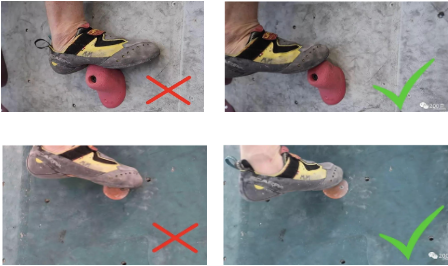
  1. Edging with toes 脚尖踩点

    The Trap:instinctively flattening the whole sole against the wall, like walking on flat ground — or avoiding small holds out of fear they will slip.

    The Trap:本能地想像走平地一样把整只鞋底贴上墙,或因为怕滑而躲开小点。

    The Fix:trust your rubber. Press with the big toe, straight down. Even a thumbnail-sized edge will lock your weight.

    The Fix:信任橡胶。用大脚趾精确往下压;指甲盖大小的沿也能把体重锁住。

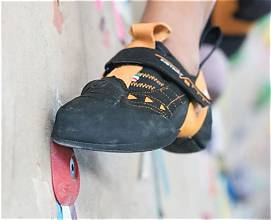
    Edging with toes: press the toe onto the hold, not the arch.
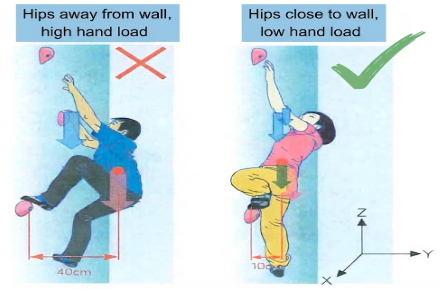
  2. Keep hips close to the wall 胯贴墙

    The Trap:pressing the chest flat against the wall like a frog, which pulls the centre of gravity outward and strains the arms.

    The Trap:胸口平贴岩壁像只青蛙,把重心往外拉,手臂吃力。

    The Fix:press the hips in. Turn sideways or open the hips so the weight sits over the feet, and the upper body can rest.

    The Fix:主动压胯。侧身或开胯,让体重落在脚的正上方,减轻上肢负担。

    Hips close to the wall: shorter lever, lower hand load.
  3. Lower the gravity — sink before you rise 先沉再起

    The Trap:standing tall and stiff to reach higher, which pulls the centre of mass away and opens a huge “open-door” force.

    The Trap:本能地站直绷紧去够高,重心被拉开,产生很大的“开门”力矩。

    The Fix:sink before you rise. Drop the hips and bend the knees to shorten the lever, then lock the weight into the feet for a stable launch.

    The Fix:先沉再起。降胯屈膝,缩短力臂,把体重垂直锁进脚里,再稳定起身。

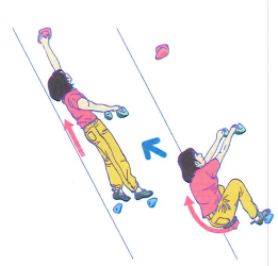
    Drop the hips before you stand up, so the legs can still push.

2.3Anxiety control & tension release克服心理恐慌与身体紧绷

  1. The panic grip — death grip 死亡抓握

    The Trap:squeezing the holds with a death grip out of fear of falling, which instantly burns out the forearms.

    The Trap:因为怕掉而死死攥点,小臂立刻泵死。

    The Fix:match grip to hold quality. Only hold as tight as necessary; relax the fingers whenever you are resting on a secure position.

    The Fix:抓力匹配岩点。只抓必要的紧度;在稳点上休息时松开手指。

  2. Conscious breathing rhythm 有意识的呼吸节奏

    The Trap:tensing every muscle from head to toe, locking up the breath and the body’s flow.

    The Trap:从头到脚每块肌肉都绷着,呼吸和动作一起锁死。

    The Fix:reset with a breath. Use an intentional exhale to drop the shoulders, shake out one arm at a time, and reset your focus.

    The Fix:用呼吸重置。主动呼气放下肩膀,一次甩一只手,把注意力拉回来。

2.4Static balance on the wall墙上的平衡美学

  1. Two-point, opposite side (diagonal limbs) 两点、异侧(对角手脚)

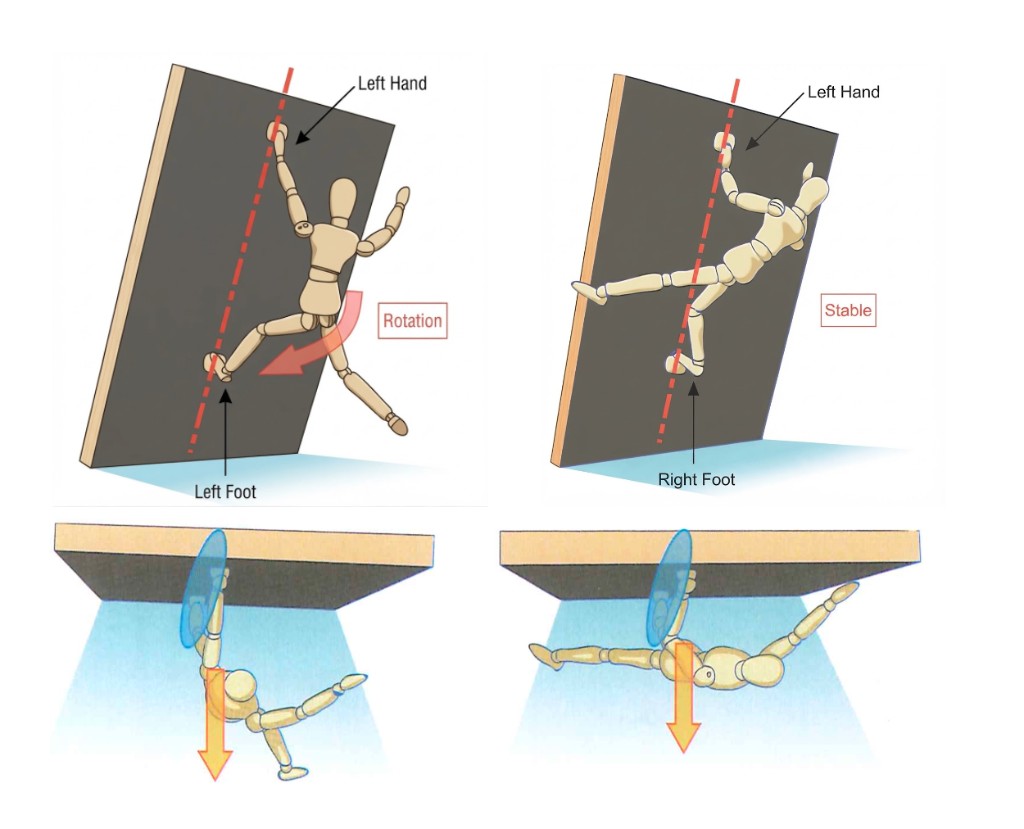
    Cross-axis:right hand + left foot (or left + right) form a diagonal axis that resists the rotation peeling you off.

    交叉轴:右手 + 左脚(或左 + 右)形成对角轴,顶住把人转离墙的力矩。

    Same-side:same-side limbs (left hand + left foot) lack that cross-body tension, so the body rotates away.

    同侧:同侧手脚(左手 + 左脚)没有交叉张力,身体更容易被转出去。

  2. Three-point, the triangle (the acute-angle rule) 三点、三角(锐角法则)

    Structure:two hands and one foot, or two feet and one hand. Only the free limb moves.

    结构:两手一脚,或两脚一手。空出来的那一只才去移动。

    Apex rule:keep the supporting foot between the two hands (an acute triangle), not lagged off to the side. That parks your centre of mass and stops the swing.

    顶点法则:支撑脚尽量落在两手中间(锐角三角形),不要偏到很远的一侧。重心在正中间,才不容易被甩出去。

Same-side contact rotates you off the wall; opposite-side flag stays stable.

2.5The physics underneath攀岩的物理底层逻辑

  1. Leverage and torque 杠杆与力矩

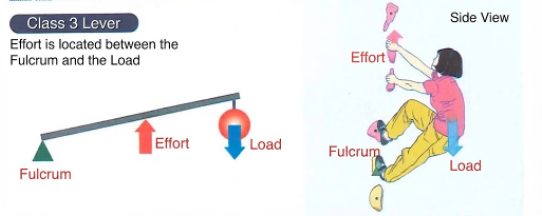
    What it is:τ = r × F. Gravity is trying to rotate you off the wall.

    是什么:τ = r × F。重力要把你转离墙。

    On the wall:Fgravity × r (belly to foothold) = Fhands × r (hand to foot). Hips closer to the wall → less force at the hands.

    On the wall:F重力 × r肚子 = F手 × r手点到脚点。臀腿越贴墙,手上的力越小。

    Class 3 lever: the effort sits between the fulcrum and the load.
  2. Action and reaction 作用与反作用

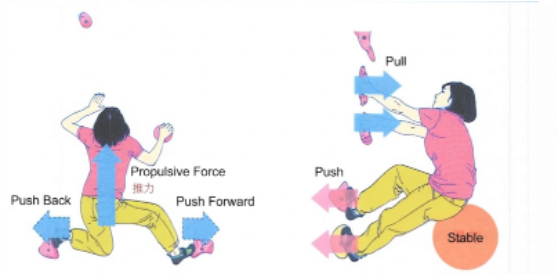
    What it is:Newton’s third law. The wall gives back exactly the force you put into it.

    是什么:牛顿第三定律。墙给你的支撑,永远等于你踩它、推它的力。

    On the wall:drive the force into the wall with the legs — the feet supply the opposing support — and the hands come free.

    On the wall:用下肢把力“钉”进墙里(脚部提供反向的支持力),才能彻底解放双手。

    Push back and push forward: the wall returns the force you put into it.
  3. Inertia and acceleration 惯性与加速度

    What it is:F = ma. Speed creates distance. Momentum reaches holds a still body cannot.

    是什么:F = ma。速度能创造距离。动能帮你够到静止时够不着的点。

    On the wall:toe push → legs stand up (give the body a v) → throw that momentum at the hold. The legs explode; the arms do not muscle the gap.

    举例:脚尖蹬 → 腿站起(给身体一个初速度 v)→ 把这股动量抛向目标点。用下肢爆发代替手臂硬拉。

    Drop and then explode upward so momentum carries you to the next hold.

2.6Dynamic flow and how you move动态流动与移动思考

  1. The rhythm of flow — linking moves seamlessly 流动的节奏:把动作连起来

    Climbing is a continuous dance, not a series of disconnected static poses. Use the momentum from the last move to float into the next, and avoid dead stops that burn out your energy.

    攀岩是连续的舞蹈,不是一串断开的静态造型。借上一个动作的动量,顺势漂进下一个,避免死停把体能耗光。

  2. Two seconds before you move — the checklist 动前两秒:检查清单

    Hold direction:which way the next hold faces? Match hand orientation.

    看开口:下一个点朝哪开?手跟着开口走。

    Assess stability:if you release this hand, is what remains a triangle or opposite-side pair — or will you rotate off?

    判断稳定:松这只手后,剩下的是三角或异侧,还是会被转出去?

    Adjust, then go:if it would rotate, high-step or switch feet first. Once feet are set, push, and catch the next hold.

    调整再动:会被转出去就先上高脚或换脚。脚稳了再蹬,够下一个点。

Skills技巧 handholds and footwork抓法与脚法

3.1Handholds岩点与抓法

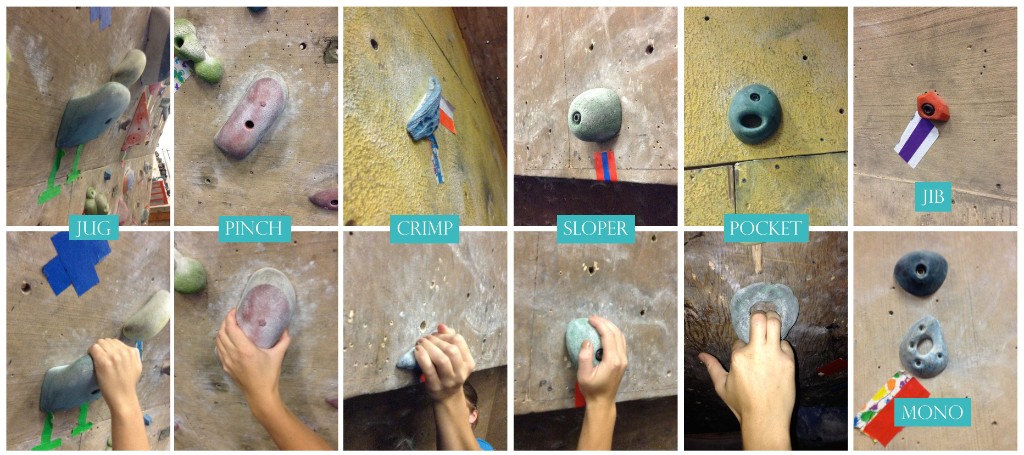
  • Jug: a big, positive hold. Wrap fingers and palm around it — the standard grip.
  • Pinch: squeeze the hold between the thumb and the other four fingers, like a volume or a rail.
  • Crimp: fingertips on a small edge, first knuckle flexed. Beginners’ tendons are fragile — use this cautiously.
  • Sloper: an open-hand on a rounded surface. Keep the pinky side of the palm close to the wall; this is the kindest grip for tendons.
  • Pocket: two or three fingers in a hole. Mono is a one-finger pocket — easy to injure. Jib: a tiny chip; often a foot, sometimes a desperate hand.
  • Jug 深点:好抓的大点。手指和手掌包住,就是标准的握。
  • Pinch 捏点:拇指对另外四指,把体积块或横条捏住。
  • Crimp 抠点:指尖抠小沿,第一指关节弯曲。初学者肌腱脆弱,慎用。
  • Sloper 斜面:开放手抓圆弧面。手掌小指一侧贴近岩壁,对肌腱最友好。
  • Pocket 洞:两三根手指伸进洞里。Mono 是单指洞,很容易伤。Jib 是很小的凸起,多当脚点,偶尔当救命手。
Hold types: jug, pinch, crimp, sloper, pocket, jib, and mono, with matching hand positions.

3.2Edging脚尖踩点 Edging

  • Stand on the inside edge of the forefoot, under the big and second toe — the stiffest rubber.
  • Keep the ankle vertical, like a ballerina. Do not roll it in or out.
  • Look at the foothold first, then place the foot. Never blind-foot.
  • 用前脚掌内侧(大脚趾和二脚趾之间)踩点,那是鞋底最硬、最灵敏的区域。
  • 脚踝尽量直立,像芭蕾,不要内外翻。
  • 先看准脚点再落脚,不要盲踩。
Edging: the inside edge of the climbing shoe on a small foothold.

Heel down脚跟下沉

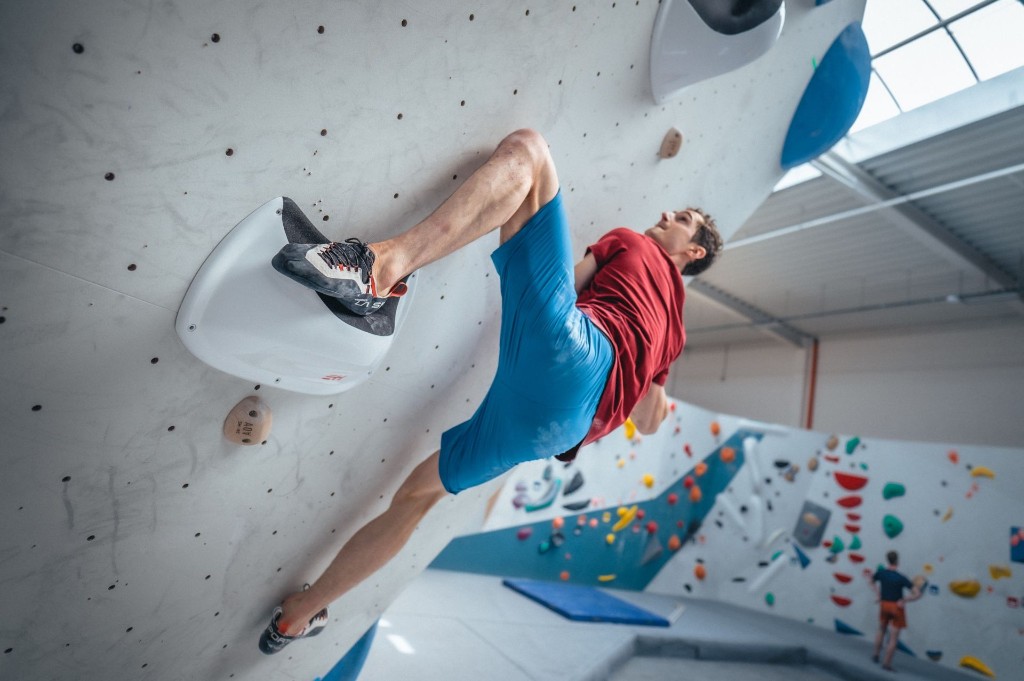
  • After you place the foot, drop the heel so more rubber sits on the hold.
  • Weight goes onto the skeleton and the shoe; hips come into the wall; the arms get a rest.
  • 踩上之后主动把脚跟压下去,让更多橡胶贴住岩点。
  • 体重交给骨骼和鞋底,髋靠近墙,手臂得以休息。
Heel down: the heel weighted on a volume to pull the body into the wall.

Smear抹点 Smear

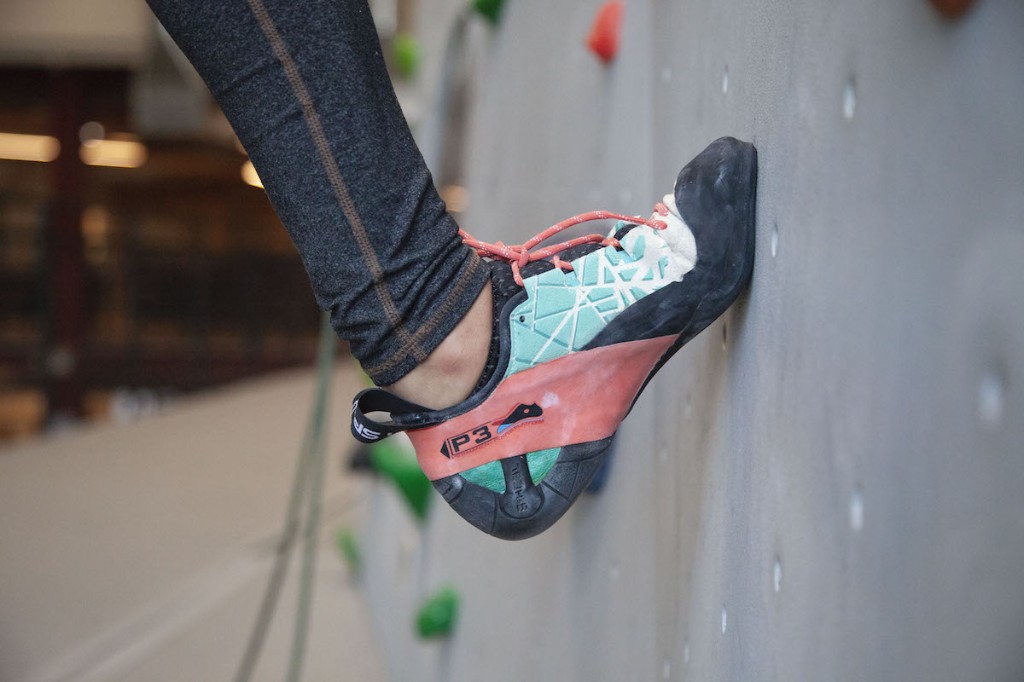
  • When there is no distinct foothold, press the whole sole onto the blank wall.
  • Keep the core tight, and keep pushing down and back so friction does not break.
  • 没有明显脚点时,把整只鞋底平贴在光滑岩面上。
  • 核心收紧,持续向下、向后压,才能保住摩擦。
Smearing: the whole sole pressed into a smooth wall for friction.

Extra notes进阶笔记 six techniques, same a / b pattern六个动作,同样是本质 / 场景

4.1Hands & feet手脚转换

  1. What it is 动作本质

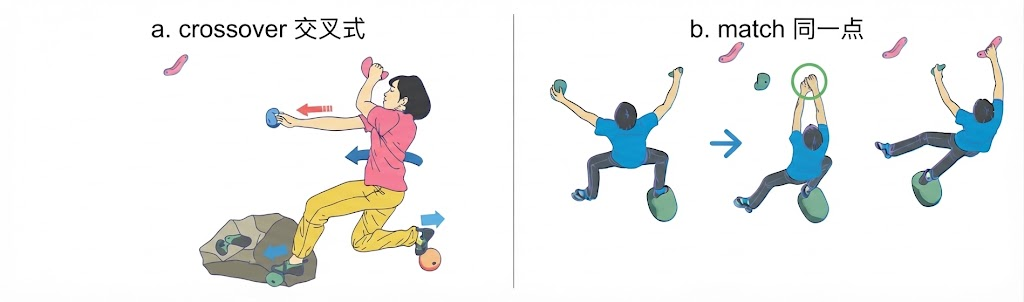
    Move a hand or foot with a crossover or a match. Cross a limb over the body line, or share one hold for a moment, so the next limb can go.

    交叉或同一点来换手、换脚。一只手或脚跨过身体中线,或短暂共用同一个点,才能腾出空间继续走。

  2. When it matters 核心场景

    Crossover:reaching across to an opposite-side hold, or managing rotation on a lateral move.

    交叉式:要够身体另一侧的点,或横向移动时管住转动。

    Match:tiny holds you must share, or a grip change while the centre stays quiet.

    同一点:点很小必须共用,或换抓时先把重心稳住。

Hands and feet transition: crossover across the body, then match on the same hold.

4.2Layback侧拉 Layback

  1. What it is 动作本质

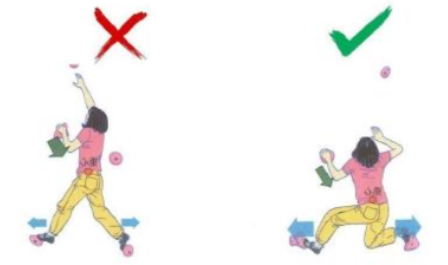
    Hands pull sideways; feet smear or edge the other way on a crack or volume lip. The body is a bridge: downward gravity becomes opposing horizontal force.

    手侧向拉,脚在裂缝或体积边缘侧向抹、踩。身体像桥,把向下的重力转成左右对拉。

  2. When it matters 核心场景

    Cracks & volumes:no positive foothold — only opposing lateral friction.

    裂缝与体积:没有正向脚点,只能靠两侧对向摩擦。

    Arm fatigue:tilt the skeleton so the bones take the load, not the forearms.

    减轻手臂:侧身走骨骼,少用小臂硬拉。

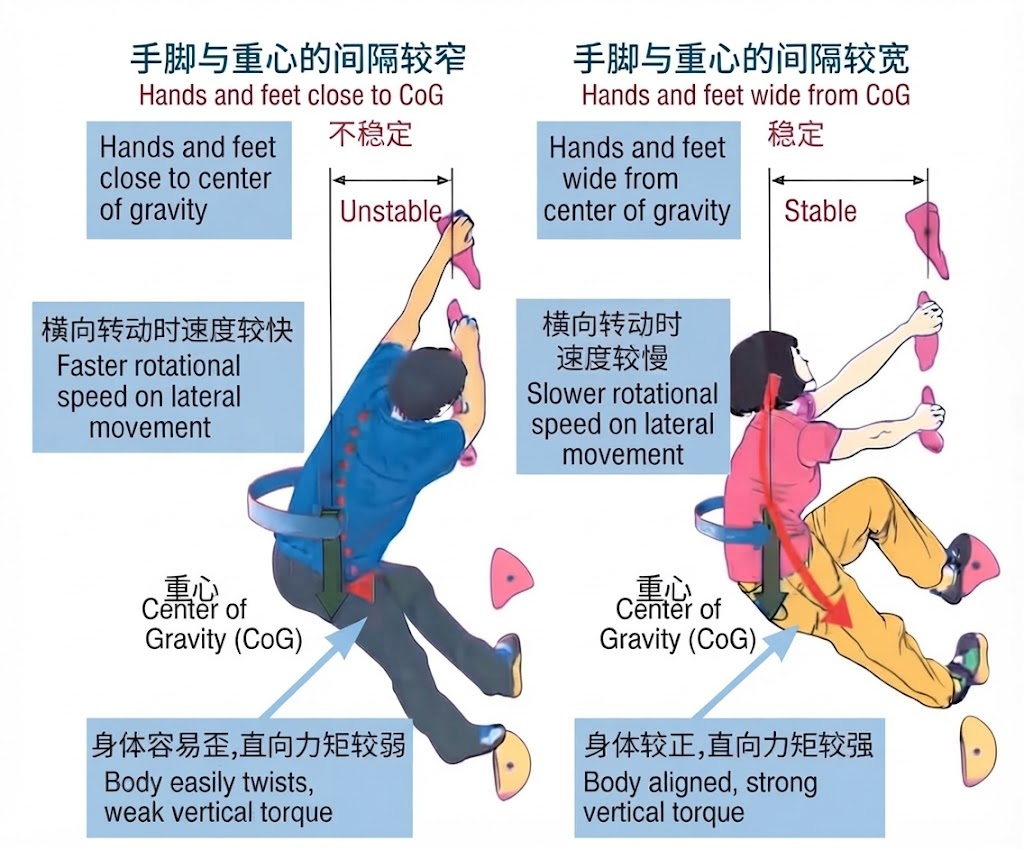
Layback stability: hands and feet close to the centre of gravity versus spread wide.

4.3Heel hook挂脚 Heel Hook

  1. What it is 动作本质

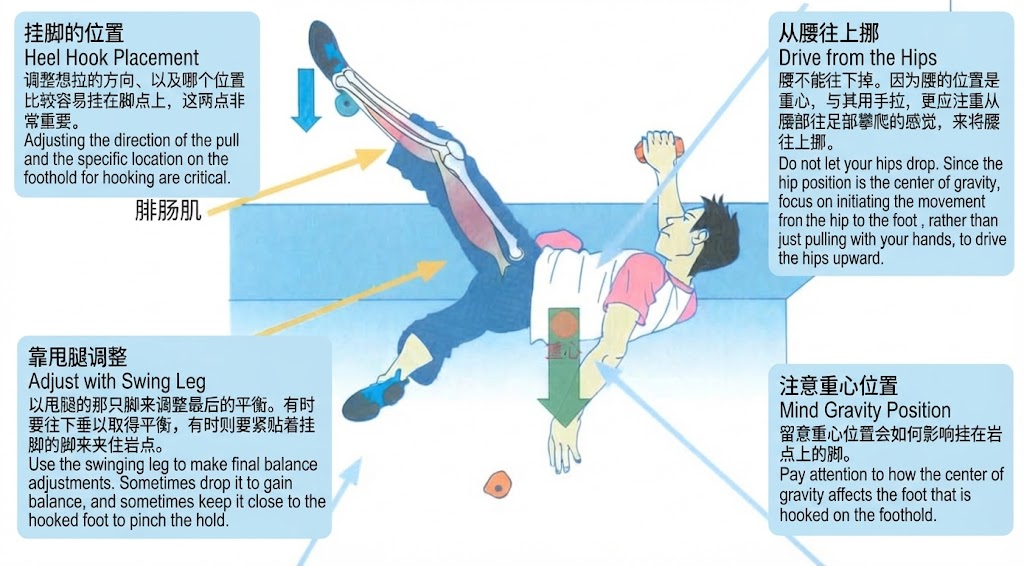
    Hook the heel on a hold, an edge, or a volume. Hamstrings and glutes pull you in or up — the heel becomes a third hand.

    用脚后跟挂在岩点、岩面边缘或大体积上。大腿后侧和臀部发力,把身体往墙上拉或往上带,相当于多了一只手。

  2. When it matters 核心场景

    Overhangs & roofs:an anchor against barn-door.

    仰角与屋顶:当锚点用,防止身体往后翻、摆荡。

    Far reaches:heel high, contract the leg, lift the pelvis.

    够远点:高处挂住后收缩腿,把骨盆往上提。

    Volumes:no foothold — the heel hooks the lip and makes a fixed point.

    大体积:没有脚点可踩时,用后跟钩住边缘当支点。

Heel hook: placement, drive from the hips, swing-leg balance, and centre of gravity.

4.4Drop knee拧膝 Drop Knee

  1. What it is 动作本质

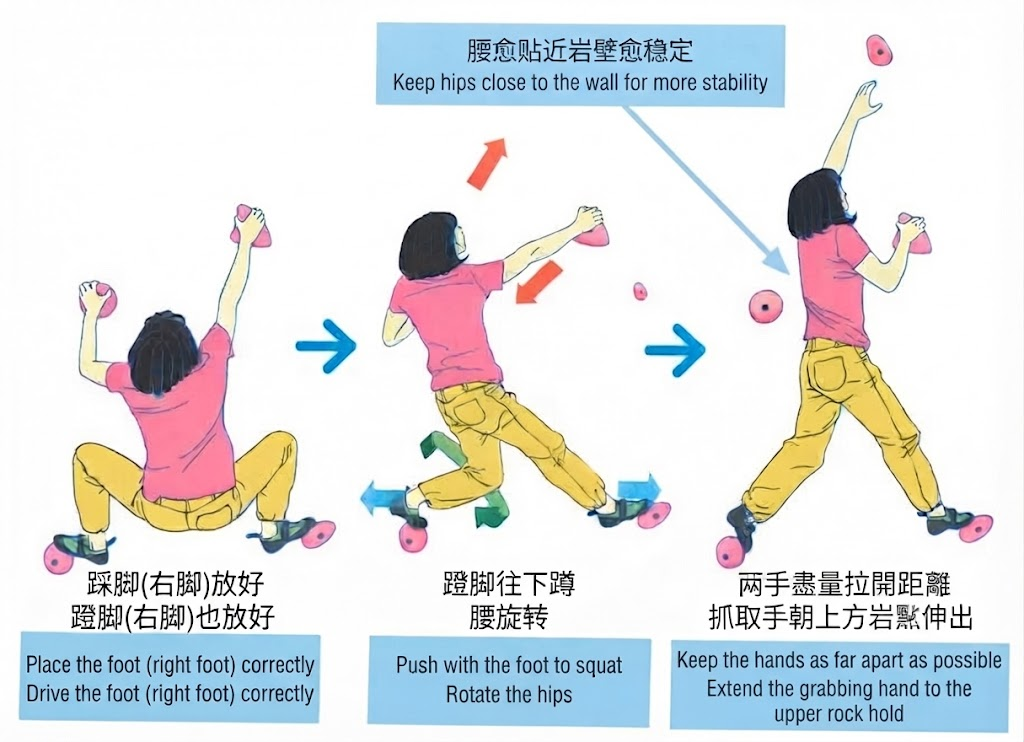
    After the foot is set, twist the knee in and rotate the hips to the wall. Hips closer = more stable, and the free hand can reach farther.

    脚踩稳后,膝盖向内拧、髋转向岩壁。腰越贴墙越稳,空出来的那只手才能够得更远。

  2. The sequence 动作顺序

    Place & drive:set the foot, then push through it.

    踩与蹬:先把脚放对,再从这只脚把力蹬出去。

    Squat & rotate:drop into a squat and turn the hips so the knee drops in.

    下蹲拧髋:蹬脚下蹲,腰跟着转,膝盖落进来。

    Reach:hands wide, extend to the upper hold — hips stay glued.

    伸手:两手尽量拉开,去够上方的点;胯始终贴墙。

Drop knee: place the foot, squat and rotate the hips, then reach.

4.5Flagging挂旗 Flagging

  1. What it is 动作本质

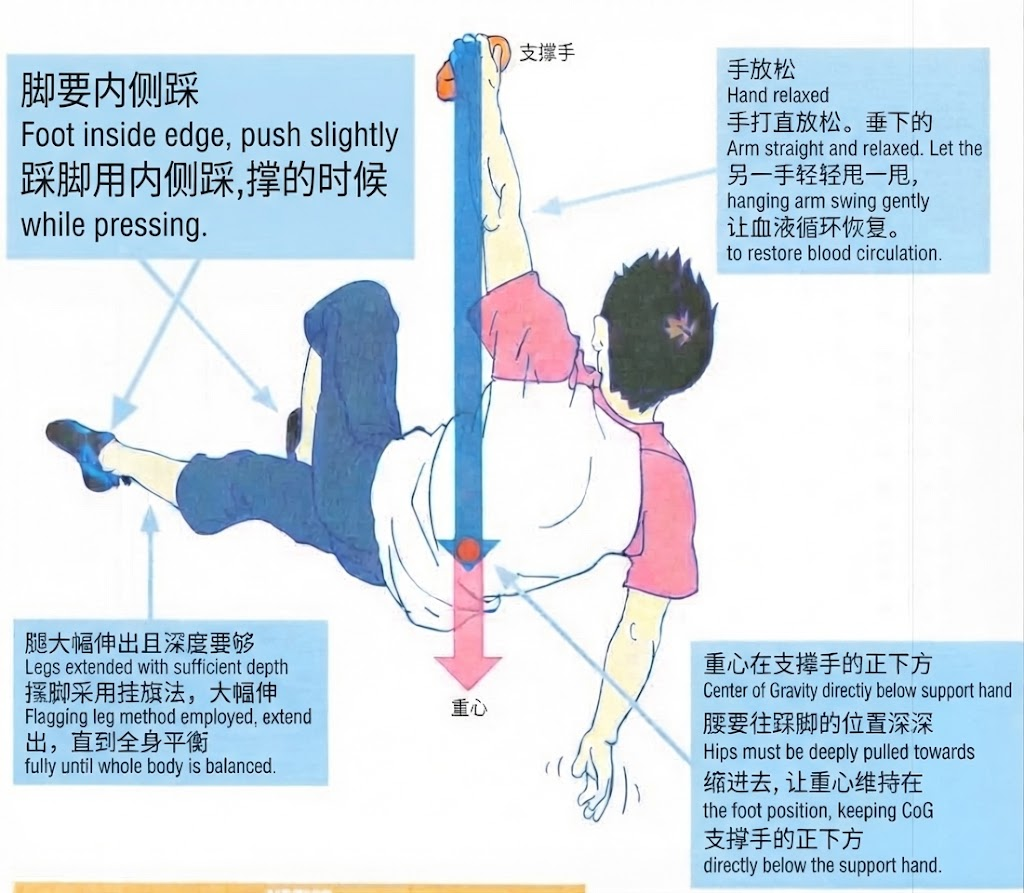
    Send one leg out or back into empty space — no foothold. That hanging leg is a counterweight against the twist.

    一条腿向外或向后伸进空处,不踩点。用这条腿当配重,顶住把人转出去的力矩。

  2. When it matters 核心场景

    Barn-door:one-sided force is spinning you off the wall.

    防开门:单侧发力要把身体甩出去时。

    Single-side balance:no matching foothold; keep the centre from rotating.

    单边平衡:没有对称脚点,靠挂旗把中轴稳住。

Flagging: inside-edge the standing foot and extend the free leg as a counterweight.

4.6Dyno跳点 Dyno

  1. What it is 动作本质

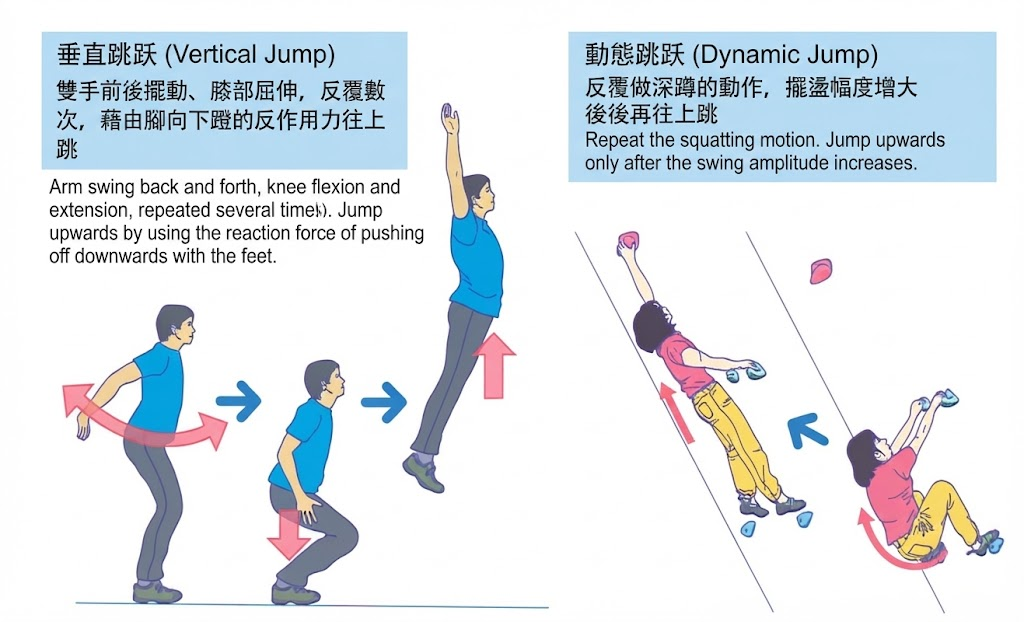
    An explosive push from the legs plus whole-body momentum. You leave the wall for a moment and catch a hold you cannot reach statically.

    下肢爆发加上全身动量,短暂离壁,抓住静态够不着的点。

  2. When it matters 核心场景

    Out of reach:no intermediate hold; a static lock-off cannot close the gap.

    够不着:没有中间点,锁死也够不到。

    Explosive momentum:a burst of kinetic energy to beat gravity.

    爆发动量:用一股动能瞬间对抗重力。

Dyno: a vertical jump from the ground, and a dynamic jump on the wall.